Income Disparity: A Disease or Just a Symptom?
My husband used to be a French socialist. It only took him about five years in America and three years of running his own business to see the light, but every now and again something will cause an angry populist sentiment to spring forth from his gut. And sometimes I do empathize with him.

[Thanks to Wikipedia for the image of Robespierre, who was besieged by such sentiments.]
Just this morning, we picked up the Saturday Financial Times from our doorstep and out fell the "How To Spend It" section. Once a month even I, the faithful daughter of a capitalist Constitutionalist, cringe with shame to see the opulence displayed in these pages: ads for Rolex, Chopard, Graff, Boodles, and other names only the wealthy (or the curious like me) would recognize; multiple pages of dour-lipped, smokey-crayon-eyed mannequins slinging million-dollar accoutrements about their gaunt frames; grand estates and haute-design resorts the likes of which one never sees in real life because they're hidden beyond impenetrable walls, inaccessible distances, or elevators that require a key.
How can the best newspaper in England continue to push this boom-time candy, at the same time as the impoverished masses of the Middle East are risking their lives with rusty AK-47s and RPG-7s for a tiny crumb of the democratic pie?
The answer is obvious, of course. The head honchos at Financial Times Limited are simply responding to market demand. So are the editors of the Wall Street Journal, who pointed out just yesterday that real estate prices in Aspen, Colorado, are climbing off the charts. The rich are still as rich as ever.
When I spoke of the irony to my husband this morning over the breakfast table, his lip curled in disgust and his gut fired up an instinctive retort about the injustice of it. During his worker days in France back in the 1970s, French union leaders had him and others burning tires in front of the CEO's brand new Mercedes to express their demands for higher salaries.
Readers may recall that the '70s were extremely inflationary, and they also may note that much of the world today is in the grips of a terrible food price squeeze. As I peruse the Patek Philippe page I think to myself that obviously something is wrong.
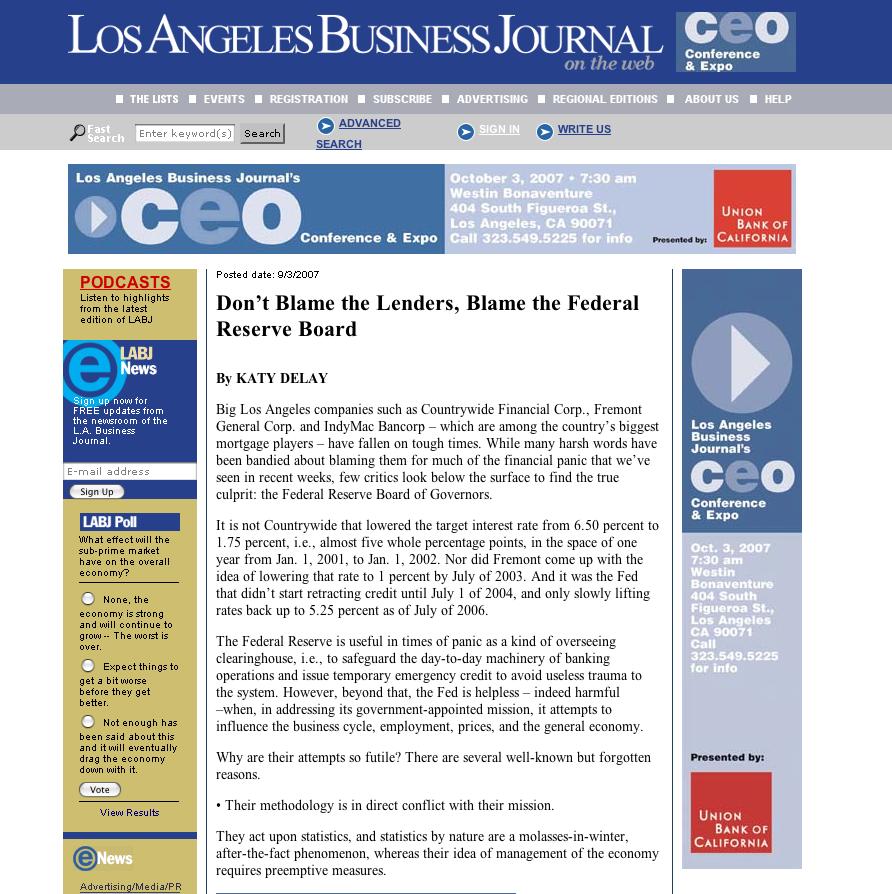
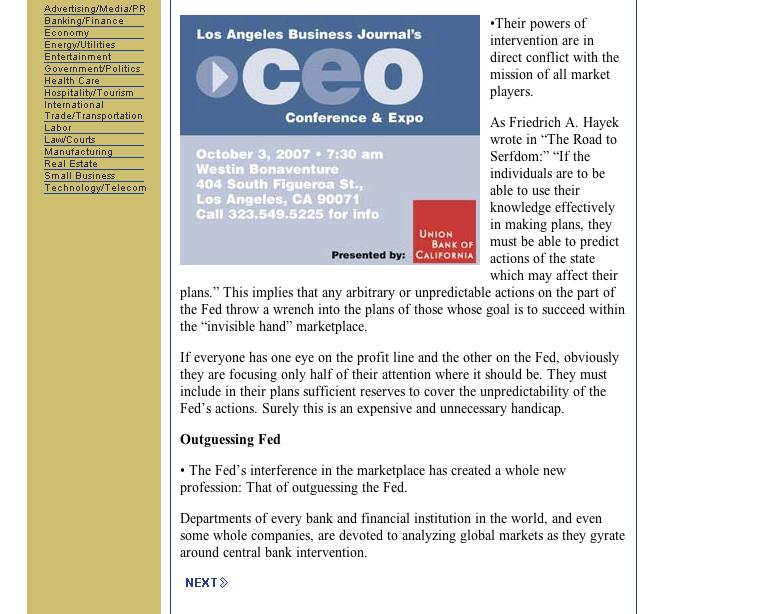
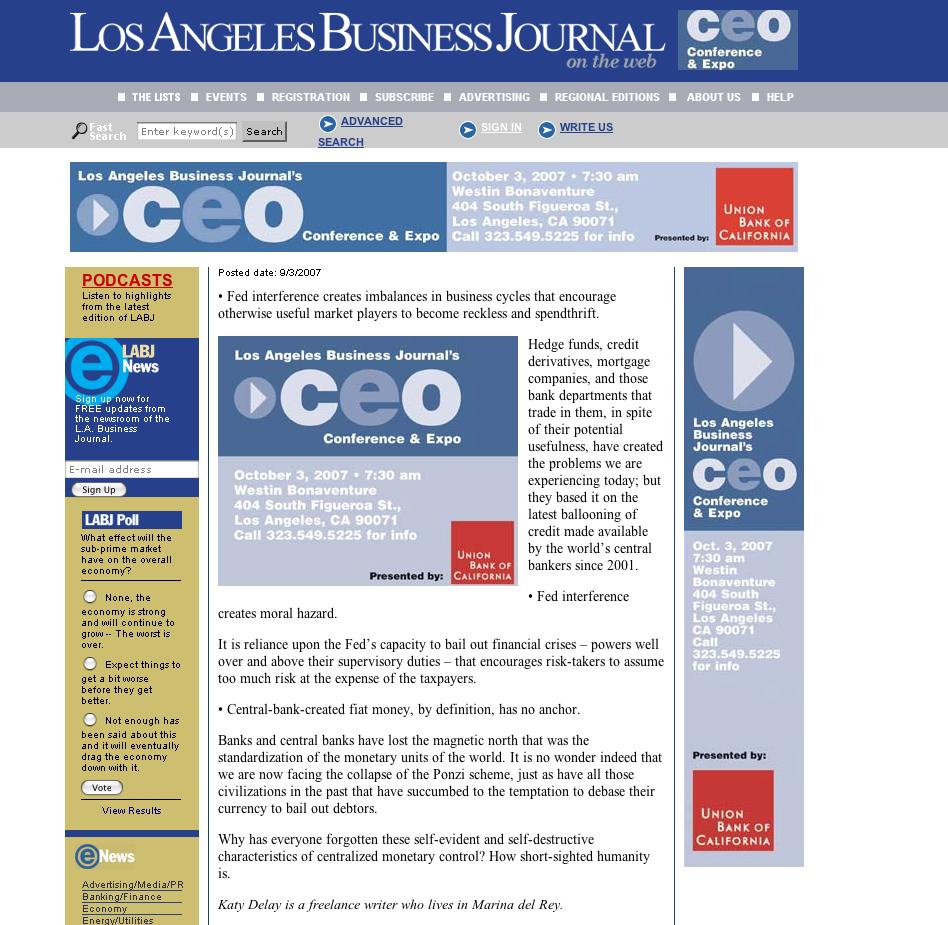
My heart absolutely gets why uninformed citizens jump to the conclusion that all rich people are thieves ripe to be taxed. But my mind struggles, wary of this negative emotion. There must be a way to explain that the solution to income disparity is not a show of force between classes, at least not in democratic Western societies with a well-entrenched rule of law. If we let violence rise, we are just dooming ourselves to be divided and conquered. We must first analyze the cause.
I reason this way:
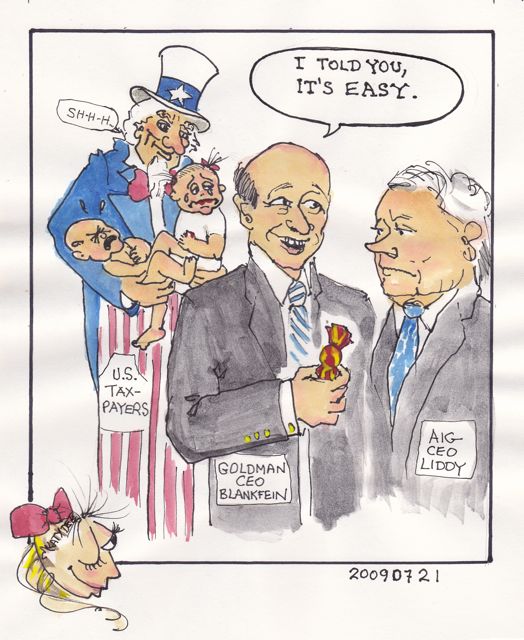
Why does Wall Street management, for example, pay out such high salaries and benefits, while some fifteen percent of the U.S. employable population can't find a job? Answer: imbalanced employment markets. Skilled-employee opportunities exist in the financial sector, and not enough job applicants have the necessary training and talent. In order to find competent people, companies must pay outrageous sums. (As my husband noted, the current chief economist of the Abu Dhabi sovereign investment fund is a former big wig of General Motors. Just imagine his compensation package.)
On the other side of town, there are fifty to a hundred unskilled or semi-unskilled workers for every position that comes up. Given the excess of supply over demand for labor, wages stagnate, even in the face of record profits and a rising cost of living.
This disequilibrium can go on for years, creating a disparity between the two factions: the well compensated and the strugglers. And the gap can become huge before anyone really notices, especially in high times when equity is rising and unwise homeowners are building up debt by pulling credit out of their over-assessed abode.
So what causes employment markets to display this kind of imbalance? I hypothesize there are a number of reasons, among which two are flagrant. First: Regime Uncertainty. This phrase is Robert Higgs's term for our malaise regarding the country's political future. Industry leaders must make decisions regarding thousands, millions, and even sometimes billions of dollars of investment in capital expenditures, and Regime Uncertainty makes them cautious.
Before spending a penny and creating one job, CEOs must ask themselves, Which party will be in control in 2012? What will the multitude of alphabet agencies on federal and state levels do to regulate our industry? What will our tax situation be over the next year, over the next decade? Is there a country out there than can give me a better deal?
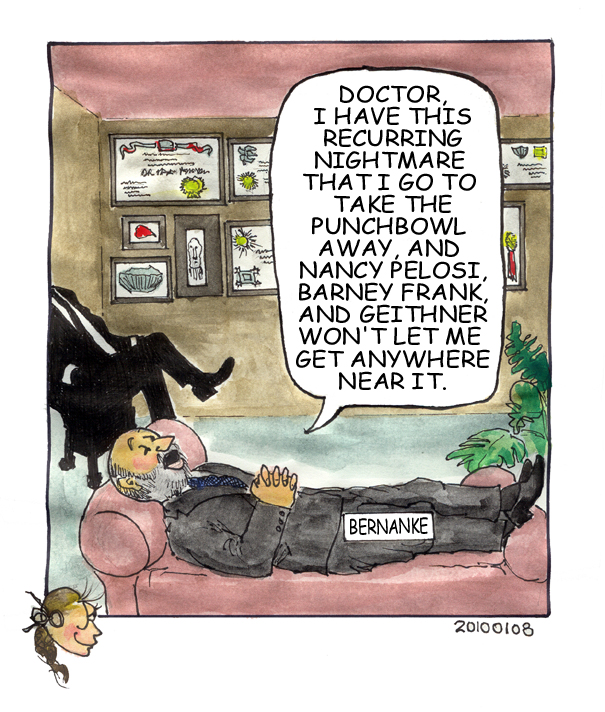
Second: Monetary Uncertainty. They're asking, How cheap or expensive will credit be in the future? How much long-term debt can our company afford? What will happen to prices? What will the dollar be worth next year, next month? Will the dollar maintain its reserve-currency status? Would we do well to invest in euros, or yuan, or gold? Maybe our best bet is to bide time with short-term speculations on Wall Street?
'Nuff said. You know what they have decided to do.
So let's not fight the symptoms. We'll just tear each other apart, and maybe destroy the country in the process. We must fight the cause of the illness. Let's give industry something they can bet on, i.e. a sound political climate and a more stable, more robust monetary policy. (See other posts for suggestions.)
Only then can American industry put us all back to work, on the path to a better standard of living and more equitable income distribution.
[Thanks to Wikipedia for the image of Robespierre, who was besieged by such sentiments.]
Just this morning, we picked up the Saturday Financial Times from our doorstep and out fell the "How To Spend It" section. Once a month even I, the faithful daughter of a capitalist Constitutionalist, cringe with shame to see the opulence displayed in these pages: ads for Rolex, Chopard, Graff, Boodles, and other names only the wealthy (or the curious like me) would recognize; multiple pages of dour-lipped, smokey-crayon-eyed mannequins slinging million-dollar accoutrements about their gaunt frames; grand estates and haute-design resorts the likes of which one never sees in real life because they're hidden beyond impenetrable walls, inaccessible distances, or elevators that require a key.
How can the best newspaper in England continue to push this boom-time candy, at the same time as the impoverished masses of the Middle East are risking their lives with rusty AK-47s and RPG-7s for a tiny crumb of the democratic pie?
The answer is obvious, of course. The head honchos at Financial Times Limited are simply responding to market demand. So are the editors of the Wall Street Journal, who pointed out just yesterday that real estate prices in Aspen, Colorado, are climbing off the charts. The rich are still as rich as ever.
When I spoke of the irony to my husband this morning over the breakfast table, his lip curled in disgust and his gut fired up an instinctive retort about the injustice of it. During his worker days in France back in the 1970s, French union leaders had him and others burning tires in front of the CEO's brand new Mercedes to express their demands for higher salaries.
Readers may recall that the '70s were extremely inflationary, and they also may note that much of the world today is in the grips of a terrible food price squeeze. As I peruse the Patek Philippe page I think to myself that obviously something is wrong.
My heart absolutely gets why uninformed citizens jump to the conclusion that all rich people are thieves ripe to be taxed. But my mind struggles, wary of this negative emotion. There must be a way to explain that the solution to income disparity is not a show of force between classes, at least not in democratic Western societies with a well-entrenched rule of law. If we let violence rise, we are just dooming ourselves to be divided and conquered. We must first analyze the cause.
I reason this way:
Why does Wall Street management, for example, pay out such high salaries and benefits, while some fifteen percent of the U.S. employable population can't find a job? Answer: imbalanced employment markets. Skilled-employee opportunities exist in the financial sector, and not enough job applicants have the necessary training and talent. In order to find competent people, companies must pay outrageous sums. (As my husband noted, the current chief economist of the Abu Dhabi sovereign investment fund is a former big wig of General Motors. Just imagine his compensation package.)
On the other side of town, there are fifty to a hundred unskilled or semi-unskilled workers for every position that comes up. Given the excess of supply over demand for labor, wages stagnate, even in the face of record profits and a rising cost of living.
This disequilibrium can go on for years, creating a disparity between the two factions: the well compensated and the strugglers. And the gap can become huge before anyone really notices, especially in high times when equity is rising and unwise homeowners are building up debt by pulling credit out of their over-assessed abode.
So what causes employment markets to display this kind of imbalance? I hypothesize there are a number of reasons, among which two are flagrant. First: Regime Uncertainty. This phrase is Robert Higgs's term for our malaise regarding the country's political future. Industry leaders must make decisions regarding thousands, millions, and even sometimes billions of dollars of investment in capital expenditures, and Regime Uncertainty makes them cautious.
Before spending a penny and creating one job, CEOs must ask themselves, Which party will be in control in 2012? What will the multitude of alphabet agencies on federal and state levels do to regulate our industry? What will our tax situation be over the next year, over the next decade? Is there a country out there than can give me a better deal?
Second: Monetary Uncertainty. They're asking, How cheap or expensive will credit be in the future? How much long-term debt can our company afford? What will happen to prices? What will the dollar be worth next year, next month? Will the dollar maintain its reserve-currency status? Would we do well to invest in euros, or yuan, or gold? Maybe our best bet is to bide time with short-term speculations on Wall Street?
'Nuff said. You know what they have decided to do.
So let's not fight the symptoms. We'll just tear each other apart, and maybe destroy the country in the process. We must fight the cause of the illness. Let's give industry something they can bet on, i.e. a sound political climate and a more stable, more robust monetary policy. (See other posts for suggestions.)
Only then can American industry put us all back to work, on the path to a better standard of living and more equitable income distribution.
Labels: employment markets, income disparity, Monetary Uncertainty, Regime Uncertainty
posted by Katy Delay at 5:15 PM
2 comments