Bogeyman Economics
I'm just a buffoon, and I love a little laughter. We all need a little comic relief from time to time, so I like to make light of the economic mess we're in. However, when surly individuals with Ph.D.s and/or lots of government power start making spooky declarations and rattling their chains, I get a little nervous. After all, they could hurt somebody.

[Thanks to Zoogstercostumes.com for the image.]
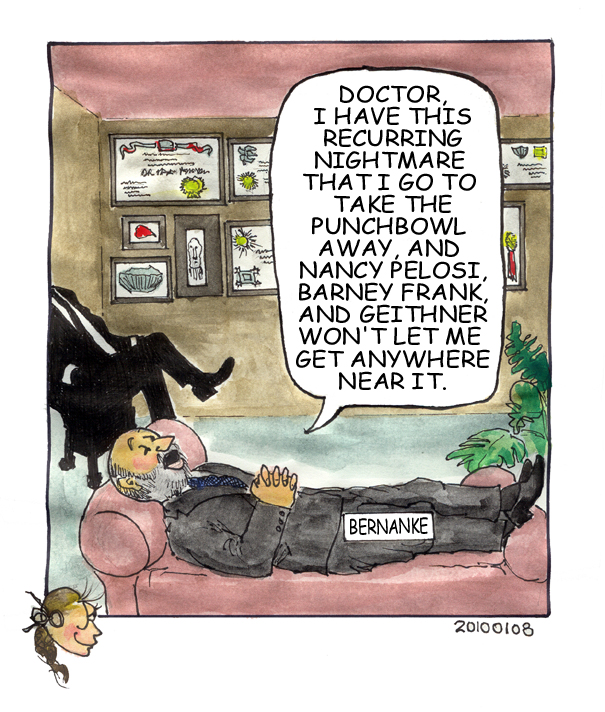
Take Ben Bernanke, Timothy Geithner, and Alan Blinder, for example.
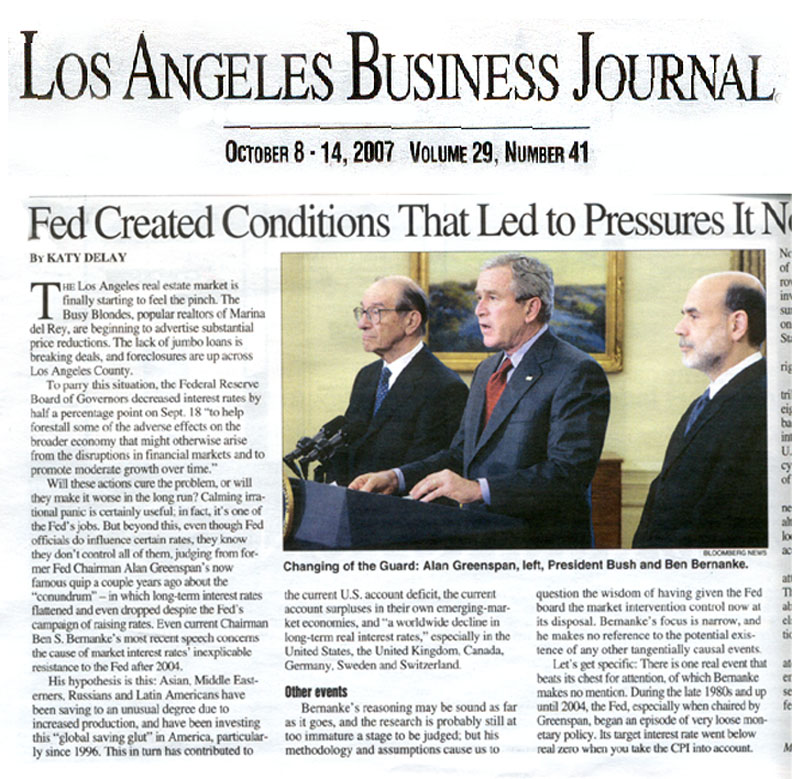
A few months ago, Dr. Bernanke looked Steve Croft straight in the eye and declared his absolute faith that the Federal Reserve can keep our economy stable and, at the same time withdraw the Fed's monetary support as soon as prices rise too much in the U.S.
I guess he thinks prices outside the country can rise as much as they want and it's not our problem. Yet credible researchers argue that U.S. monetary looseness is directly behind the current international rise in dollar-priced commodities. (See this Steve H. Hanke article for a breath of fresh common sense.) And rising food and raw material prices around the world cause misery, poverty, and death. (See this report by the World Bank.)
Then almost in the same sentence Bernanke went on to tell Steve about controlling "market expectations." Now, which is it, Sir? Does withdrawal of monetary support really stop incipient price inflation, or is price inflation merely the result of "market expectations"? Because in the latter case, you must believe that the Fed's words are more important that its actions.
But even Bernanke seems to admit that, sooner or later, the Fed will have to correct the situation; yet I don't see how the Fed can withdraw liquidity without causing a rise in interest rates and a second serious economic dip. So I suspect Bernanke and his colleagues are hoping against hope they can keep liquidity high, convince the markets that price inflation isn't going to happen, and then -- Voila, no price inflation, i.e. an economic miracle. Good luck to you, Doc. When it goes awry, either with price inflation or a second dip, don't say I didn't tell you so.
Then there's our Secretary of the Treasury, Mr. Timothy Geithner, warning us that the debt ceiling must be raised or America could default. Now, you and I know this is nonsense. (If you're not sure, read this common sense piece from Michael D. Tanner.) But no matter to the all-powerful Mr. Geithner. Recently his main purpose in life has been to scare debt-wary Republicans into believing they're driving the country into default. But, Mr. Geithner, what happens when Congress does raise the ceiling? Obviously, it condones the debt spending. But wait a minute, don't you get it, Sir? We don't want any more debt. How much of "No more!" don't you understand? You may not care if the U.S. retains its credibility, but we do.
Professor Alan Blinder, a Keynesian voodoo-economics professor at Princeton, declares that "if we crash into the debt ceiling ... it's not likely to be pretty. [WSJ commentary.] ... "At some point," says Blinder, "Mr. Geithner could wind up brooding over horrible questions like these: Do we stop issuing checks for Social Security benefits, or for soldiers' pay, or for interest payments to the Chinese government? Such agonizing choices are what make default imaginable."
Sounds like plain old scaremongering to me. This guy is the kind of academic soothsayer who furnishes politicians like Geithner with serious-sounding, credentialed ammunition. Shame on you, Professor. You're lucky you won't have to pay for the mess when U.S. debt explodes off the charts and we can't even pay the interest anymore.
Blinder goes on: "[S]uppose the federal government actually does reduce its expenditures by 40% overnight. That translates to roughly $1.5 trillion at annual rates, or about 10% of GDP. That's an enormous fiscal contraction for any economy to withstand, never mind one in a sluggish recovery with 9% unemployment. Even contemplating such a possibility is evidence of a dark, self-destructive impulse."
So Professor, which is the more self-destructive party: the academics like yourself, along with the politicians and their voters, who have gotten the U.S. into the worst pickle of its history, or those who would try to save us from people like you? No, you can't scare me -- well, wait; actually, you DO scare me. But not for the reasons you think.
American jurisprudence is missing one important element: Political Accountability. American citizens should be able to hold individuals in positions of power accountable for their recommendations and actions, other than just voting them out of office. If people want the power, they should get the liability.
There should be a law that anyone in a position of power who makes policy decisions that later turn out to be wrong should be held responsible and should give up everything they own or will ever earn, in order to pay back a fraction of what is owed to all those who have been harmed.
Drunk bus drivers who cause accidents are fired and penalized, even put in jail. Politicians inebriated by the headiness of power, and academics swollen with their sense of self-importance, can cause billions of losses to defenseless citizens with no fear of reprisal. What do they get when they screw up? A comfortable pension, full retirement benefits, and a book deal.
That's Bogeyman Economics for you.
[Thanks to Zoogstercostumes.com for the image.]
Take Ben Bernanke, Timothy Geithner, and Alan Blinder, for example.
A few months ago, Dr. Bernanke looked Steve Croft straight in the eye and declared his absolute faith that the Federal Reserve can keep our economy stable and, at the same time withdraw the Fed's monetary support as soon as prices rise too much in the U.S.
I guess he thinks prices outside the country can rise as much as they want and it's not our problem. Yet credible researchers argue that U.S. monetary looseness is directly behind the current international rise in dollar-priced commodities. (See this Steve H. Hanke article for a breath of fresh common sense.) And rising food and raw material prices around the world cause misery, poverty, and death. (See this report by the World Bank.)
Then almost in the same sentence Bernanke went on to tell Steve about controlling "market expectations." Now, which is it, Sir? Does withdrawal of monetary support really stop incipient price inflation, or is price inflation merely the result of "market expectations"? Because in the latter case, you must believe that the Fed's words are more important that its actions.
But even Bernanke seems to admit that, sooner or later, the Fed will have to correct the situation; yet I don't see how the Fed can withdraw liquidity without causing a rise in interest rates and a second serious economic dip. So I suspect Bernanke and his colleagues are hoping against hope they can keep liquidity high, convince the markets that price inflation isn't going to happen, and then -- Voila, no price inflation, i.e. an economic miracle. Good luck to you, Doc. When it goes awry, either with price inflation or a second dip, don't say I didn't tell you so.
Then there's our Secretary of the Treasury, Mr. Timothy Geithner, warning us that the debt ceiling must be raised or America could default. Now, you and I know this is nonsense. (If you're not sure, read this common sense piece from Michael D. Tanner.) But no matter to the all-powerful Mr. Geithner. Recently his main purpose in life has been to scare debt-wary Republicans into believing they're driving the country into default. But, Mr. Geithner, what happens when Congress does raise the ceiling? Obviously, it condones the debt spending. But wait a minute, don't you get it, Sir? We don't want any more debt. How much of "No more!" don't you understand? You may not care if the U.S. retains its credibility, but we do.
Professor Alan Blinder, a Keynesian voodoo-economics professor at Princeton, declares that "if we crash into the debt ceiling ... it's not likely to be pretty. [WSJ commentary.] ... "At some point," says Blinder, "Mr. Geithner could wind up brooding over horrible questions like these: Do we stop issuing checks for Social Security benefits, or for soldiers' pay, or for interest payments to the Chinese government? Such agonizing choices are what make default imaginable."
Sounds like plain old scaremongering to me. This guy is the kind of academic soothsayer who furnishes politicians like Geithner with serious-sounding, credentialed ammunition. Shame on you, Professor. You're lucky you won't have to pay for the mess when U.S. debt explodes off the charts and we can't even pay the interest anymore.
Blinder goes on: "[S]uppose the federal government actually does reduce its expenditures by 40% overnight. That translates to roughly $1.5 trillion at annual rates, or about 10% of GDP. That's an enormous fiscal contraction for any economy to withstand, never mind one in a sluggish recovery with 9% unemployment. Even contemplating such a possibility is evidence of a dark, self-destructive impulse."
So Professor, which is the more self-destructive party: the academics like yourself, along with the politicians and their voters, who have gotten the U.S. into the worst pickle of its history, or those who would try to save us from people like you? No, you can't scare me -- well, wait; actually, you DO scare me. But not for the reasons you think.
American jurisprudence is missing one important element: Political Accountability. American citizens should be able to hold individuals in positions of power accountable for their recommendations and actions, other than just voting them out of office. If people want the power, they should get the liability.
There should be a law that anyone in a position of power who makes policy decisions that later turn out to be wrong should be held responsible and should give up everything they own or will ever earn, in order to pay back a fraction of what is owed to all those who have been harmed.
Drunk bus drivers who cause accidents are fired and penalized, even put in jail. Politicians inebriated by the headiness of power, and academics swollen with their sense of self-importance, can cause billions of losses to defenseless citizens with no fear of reprisal. What do they get when they screw up? A comfortable pension, full retirement benefits, and a book deal.
That's Bogeyman Economics for you.
Labels: Alan S. Blinder, Ben Bernanke, boogeyman economics, Timothy Geithner
posted by Katy Delay at 7:34 PM
0 comments