Doing a bit of shopping the other day, I was horrified to find my staple pack of M&Ms up to $1.29 at Office Depot. Stunned into a reality check, I decided to find out what the current supermarket price is. It's 99 cents.
Most of us look at the items we purchase regularly as an indication of how prices change. The price of M&Ms is my own personal CPI indicator. To take this particular item in a pseudo-scientific study (click on the image for a larger version):

- When I was an adolescent in the 1960s, a one-portion pack was 5 cents.
- I remember a few years later when the pack size began to vary a lot. Mars and the other candy makers started offering Jumbo Packs with twice as much for three times the price and other hoaxes like that, so they could hide the price increase.
- My next statistical indicator comes from the mid- to late-1990s when I owned a small coffee shop and market. I sold my M&Ms portion pack (who knows how many ounces by this time) for 55 cents.
- Today, ten years later, they're at 99 cents, almost double.
Something's happening.
Moving to my reliable source of price inflation information,
AIER.org's Cost-of-Living calculator calculates that my 5-cent candy in 1955 should be priced at something like 41 cents today, assuming the portions are approximately the same. Of course, they may not be; but in your estimation, in which direction would the portions vary? Larger, or smaller? Well, let's not denigrate the candy companies. Let's just say that the ounces are the same.
So, I conclude that my M&Ms have increased in price at a rate of double the national average. Which brings me to the subject of the coming world food crisis.
According to Robert Zoellick, the President of the World Bank Group and the fellow I heralded for having dared to bring up the dead subject of the gold standard, the world can take many steps to "put food first." The G20 should "empower the poor" to ensure "the availability of nutritious food." In his
piece in the Financial Times of January 6, 2011, world governments can and should take eight steps to achieve this goal in face of rising food prices.
The steps include improvement of weather forecasting (good luck), exempting "humanitarian food aid from export bans" (good luck), establishing "small regional humanitarian reserves in disaster-prone, infrastructure-poor areas (good luck), and helping "smallholder farmers become a bigger part of the solution to food security" (good luck).
I thought Mr. Zoellick had a grain of good common sense when I read his piece about gold's helpful role as a barometer of worldwide inflating. He is letting me down. If I read correctly from this article, he is just another bureaucrat ... but how silly of me. What was I expecting from someone at the World Bank?
Why doesn't he see that the price of sugar is not a supply problem? It is a monetary problem. If it were a supply problem it would be the only commodity with a rising price. However, as the charts reveal, all commodities are rising to record levels, with few exceptions. Take a look at
this chart from Indexmundi.com.
There is no question but that the world is headed into a food price crisis. But my analysis of the problem does not point to governments or government agencies as the solution. The real long-term solution lies in finding an anchor for the world's monetary units, whether it be gold or something else.
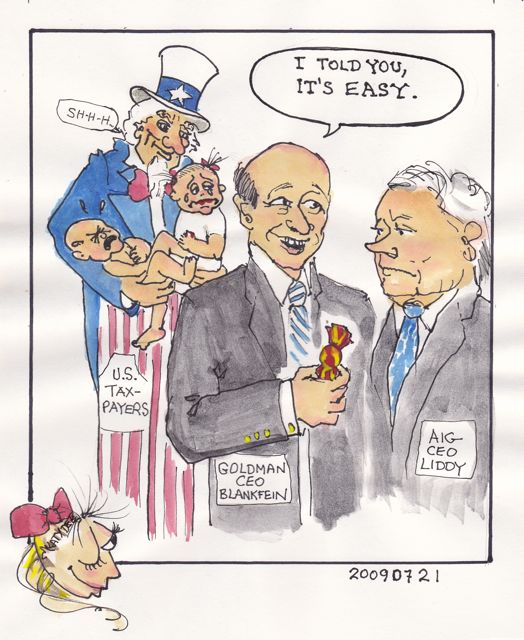
More close to home, the question, as I have said before, is: Will this wave of commodity price increases translate into a CPI index rise in the U.S.? We have already got higher gasoline prices, and now higher M&M prices. Will it spread to everything else?
That depends on several factors: (1) the turn of U.S. political winds; (2) the health of U.S. and European banks, which in turn depends on the health of the real estate/banking sector in the U.S. and the PIIGS situation in Europe; and (3) the effect of the above on the interest rate markets, which in turn will have an effect on (2).
Some analysts expect the Fed's and other central banks' monetary actions will produce widespread price inflation worldwide. But this can happen only if the deflationary hot air can blow out of depressed economies. What if (1), (2), and (3) turn negative? And/or what if the deflationary pressures underlying our current crisis turn out to be ongoing? The Fed can "print" all it wants, but it cannot (a) force prices up, or (b) force interest rates down against the will of the gods of markets.
This is the infamous
rock-and-hard-place I have mentioned in previous posts. My slow-motion
movie climax is approaching. Keep your eyes open over the next few months.
Labels: CPI, Great Recession, inflating, inflation, monetary policy