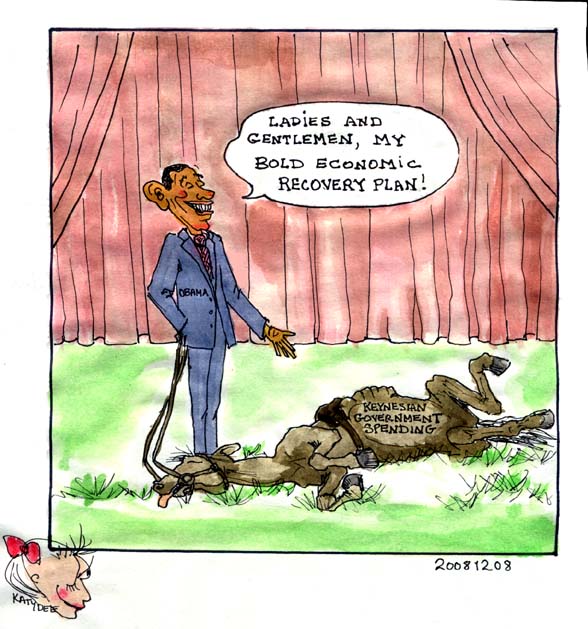
Government Intervention Run Amuck No. 20: Bank Intervention
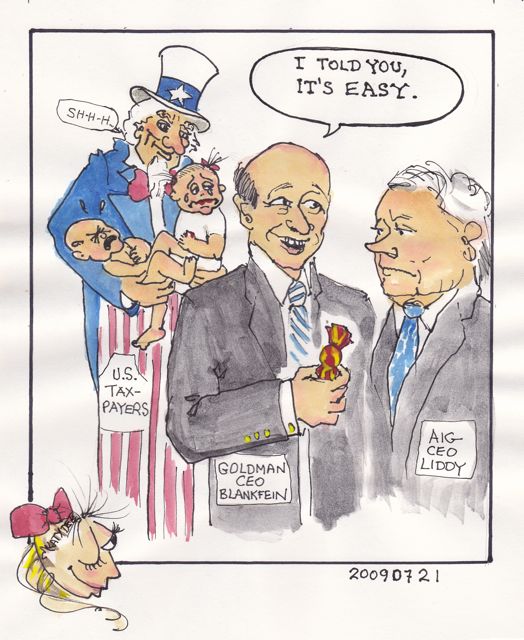
My list of examples of the unintended consequences of government intervention in the marketplace gets longer and longer. This time, I'm going to point out the latest irony: Investment banking's profitable last quarter.

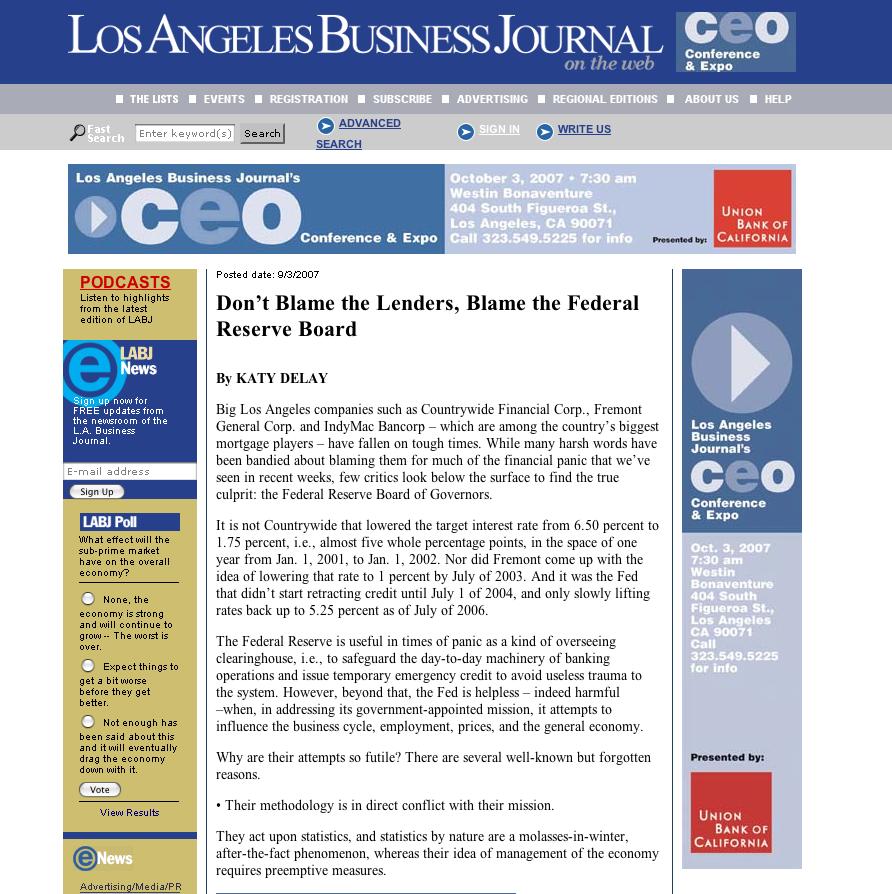
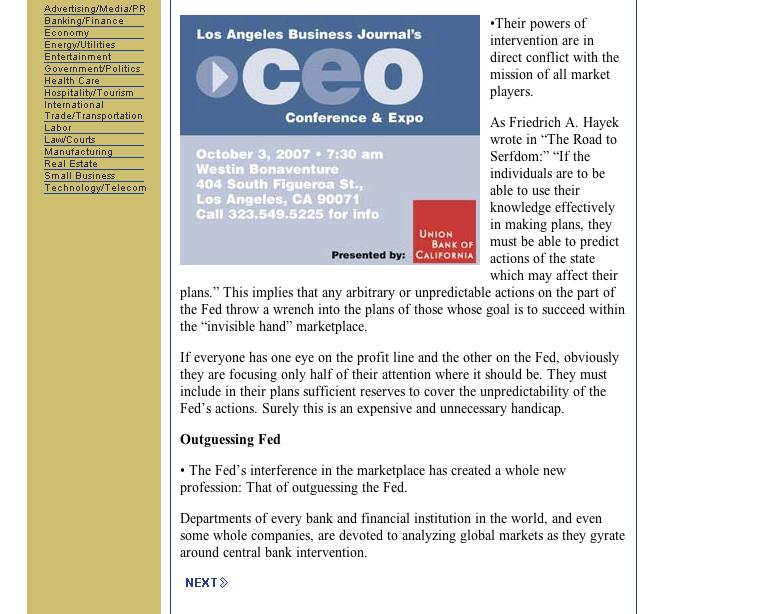
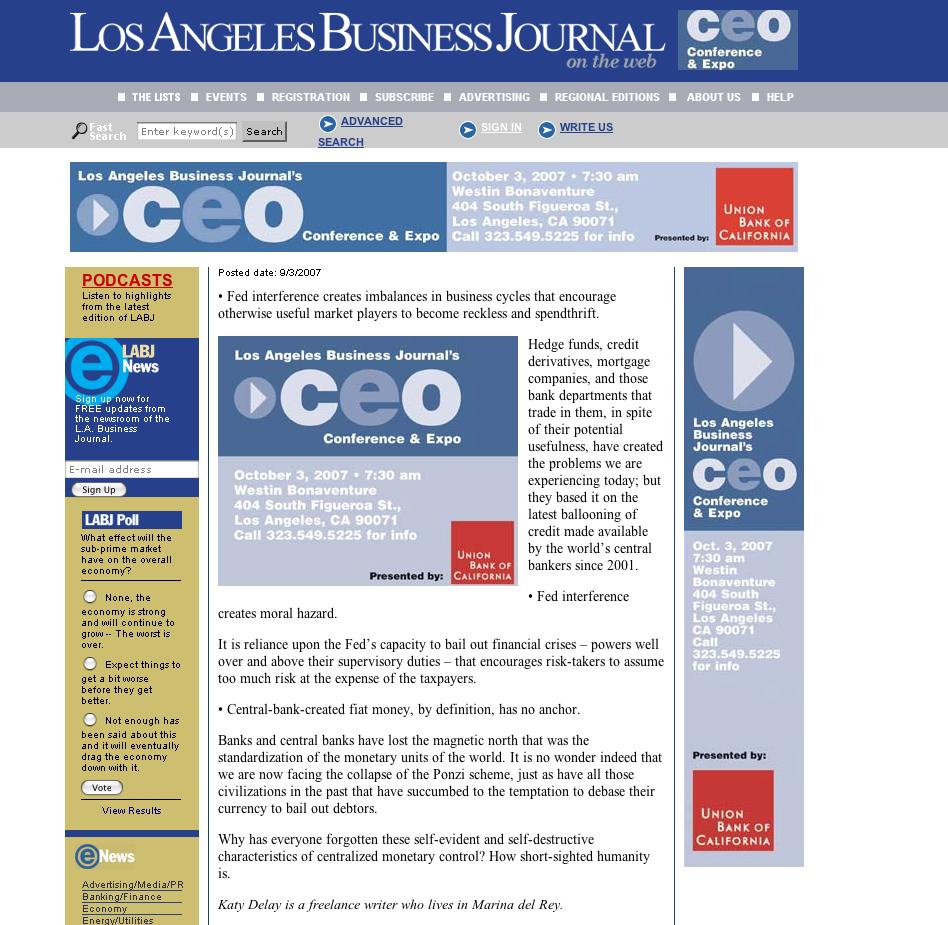
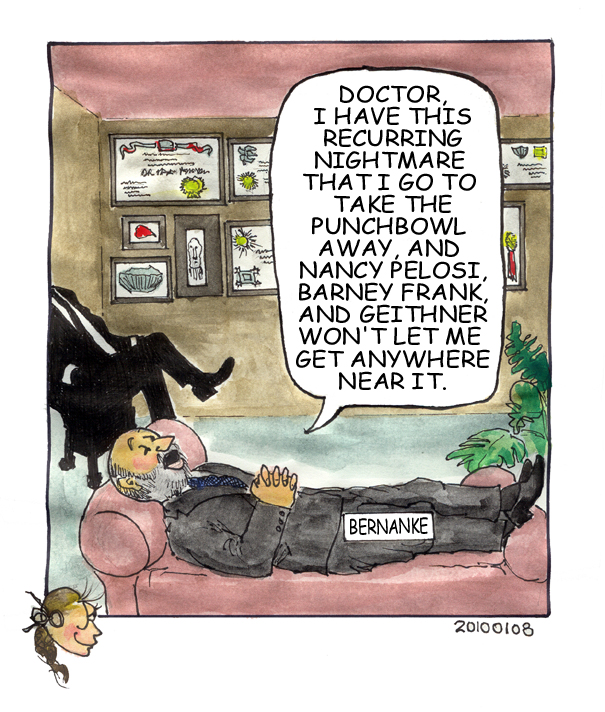
[Thanks to Thevoiceforschoolchoice.wordpress.com for the photo.]
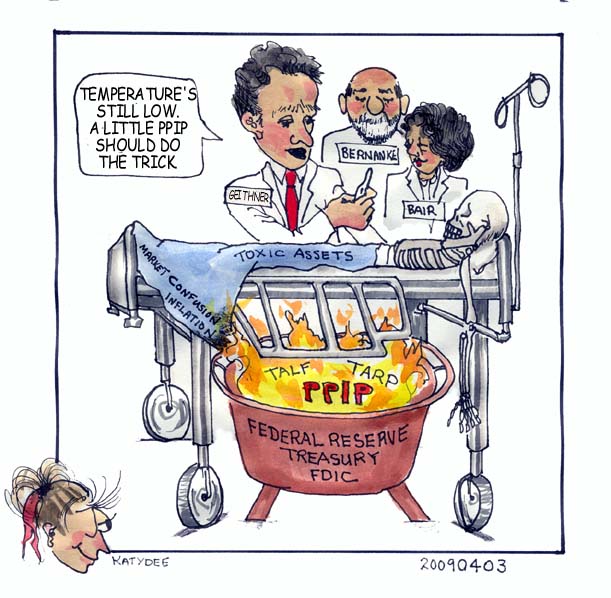
This would be wonderful news if it were genuine, but looking a little deeper reveals the truth. First, in one of Barron's feature articles by Andrew Bary, we learn about a little-discussed fact: Goldman Sachs has only been able to issue low-cost debt due to the backing of the FDIC through a program called the TLGP, or Temporary Liquidity Guarantee Program.
I suppose this program is no secret, but somehow it had escaped me that Goldman, JP Morgan, Morgan Stanley, and others are relying heavily on it to survive, at the same time as they are declaring profits and claiming that they want to return the TARP money in a show of strength. In fact, it's all show and no strength when you look at the facts.
Here's another thing that raises my cockles. Goldman has stated first quarter earnings as $1.8 billion. As Alan Abelson points out in his weekly Up & Down Wall Street column, Goldman's profit statement all but ignores results for December because of a fluke fiscal-year switch. "Goldman lost some $780 million in December," says Abelson. This brings the four-month profit down to $1.02 billion, which is still respectible; but somewhere else in Barron's (I can't find it now) we learn that Goldman made most of that profit through a risky bet on bond futures.
Isn't risky betting what got us into this mess? And aren't firms like Goldman now gambling with our tax dollars? Aren't we rewarding and encouraging the very behavior that helped get us where we are today? And is there any guarantee that they will make good bets (with our money) in the future? Shouldn't these people be market-dead?
Abelson conjectures, furthermore, along with his source Zero Hedge, that some of Goldman's $1.8 billion profit may have come from payments by AIG, who "'gifted the major bank counterparties with trades which were egregiously profitable to the banks.' This would largely explain, according to Zero Hedge, why a number of major banks actually, as they claimed, were profitable in January and February. But the profits, it is quick to point out, are of the one-shot variety, and ultimately, they entailed a transfer of money from taxpayers to banks, with AIG acting as intermediary."
My free-market instincts have always told me to hold onto my resentment of big bonuses and the new divide between the rich and the "middle class," as illustrated in the supplementary section to this weekend's Wall Street Times, with glossy pictures of dozens of fabulous mansions for sale around the country. And echoing my own sentiment, Gregory J. Millman chides me in his Barron's piece this weekend, "let's not go ape about fairness." He's right--or he would be, in a free-market society.
But Mr. Millman, this market isn't free and hasn't been for decades. How can we talk about free market when the banking barons are divvying up our hard-earned tax money, thanks to the largesse of those who didn't earn it, our legislative representatives? How can we talk about fair competition when the playing field is rigged in favor of the big boys, and the small businessmen and women just have to suck it up when they learn from their subsidized bank that they can't have any of the handouts? How can we talk about a deflationary correction, elimination of the unhealthy business models, and a return to saner plain-vanilla banking, when our legislators continue to reward foolhardy risk-taking?
We're headed in the wrong direction. More limited government is the answer, not bail-outs of bankers who should be dead by any Darwinian-Schumpeter standard; not Treasury-instigated bank "stress tests" that will soon go bang in the night, raining multiple unintended consequences; not back-room cronyism in the name of "saving the system."
[Thanks to Thevoiceforschoolchoice.wordpress.com for the photo.]
This would be wonderful news if it were genuine, but looking a little deeper reveals the truth. First, in one of Barron's feature articles by Andrew Bary, we learn about a little-discussed fact: Goldman Sachs has only been able to issue low-cost debt due to the backing of the FDIC through a program called the TLGP, or Temporary Liquidity Guarantee Program.
I suppose this program is no secret, but somehow it had escaped me that Goldman, JP Morgan, Morgan Stanley, and others are relying heavily on it to survive, at the same time as they are declaring profits and claiming that they want to return the TARP money in a show of strength. In fact, it's all show and no strength when you look at the facts.
Here's another thing that raises my cockles. Goldman has stated first quarter earnings as $1.8 billion. As Alan Abelson points out in his weekly Up & Down Wall Street column, Goldman's profit statement all but ignores results for December because of a fluke fiscal-year switch. "Goldman lost some $780 million in December," says Abelson. This brings the four-month profit down to $1.02 billion, which is still respectible; but somewhere else in Barron's (I can't find it now) we learn that Goldman made most of that profit through a risky bet on bond futures.
Isn't risky betting what got us into this mess? And aren't firms like Goldman now gambling with our tax dollars? Aren't we rewarding and encouraging the very behavior that helped get us where we are today? And is there any guarantee that they will make good bets (with our money) in the future? Shouldn't these people be market-dead?
Abelson conjectures, furthermore, along with his source Zero Hedge, that some of Goldman's $1.8 billion profit may have come from payments by AIG, who "'gifted the major bank counterparties with trades which were egregiously profitable to the banks.' This would largely explain, according to Zero Hedge, why a number of major banks actually, as they claimed, were profitable in January and February. But the profits, it is quick to point out, are of the one-shot variety, and ultimately, they entailed a transfer of money from taxpayers to banks, with AIG acting as intermediary."
My free-market instincts have always told me to hold onto my resentment of big bonuses and the new divide between the rich and the "middle class," as illustrated in the supplementary section to this weekend's Wall Street Times, with glossy pictures of dozens of fabulous mansions for sale around the country. And echoing my own sentiment, Gregory J. Millman chides me in his Barron's piece this weekend, "let's not go ape about fairness." He's right--or he would be, in a free-market society.
But Mr. Millman, this market isn't free and hasn't been for decades. How can we talk about free market when the banking barons are divvying up our hard-earned tax money, thanks to the largesse of those who didn't earn it, our legislative representatives? How can we talk about fair competition when the playing field is rigged in favor of the big boys, and the small businessmen and women just have to suck it up when they learn from their subsidized bank that they can't have any of the handouts? How can we talk about a deflationary correction, elimination of the unhealthy business models, and a return to saner plain-vanilla banking, when our legislators continue to reward foolhardy risk-taking?
We're headed in the wrong direction. More limited government is the answer, not bail-outs of bankers who should be dead by any Darwinian-Schumpeter standard; not Treasury-instigated bank "stress tests" that will soon go bang in the night, raining multiple unintended consequences; not back-room cronyism in the name of "saving the system."
Labels: economics, government bailout, government intervention
posted by Katy Delay at 12:10 PM
0 comments