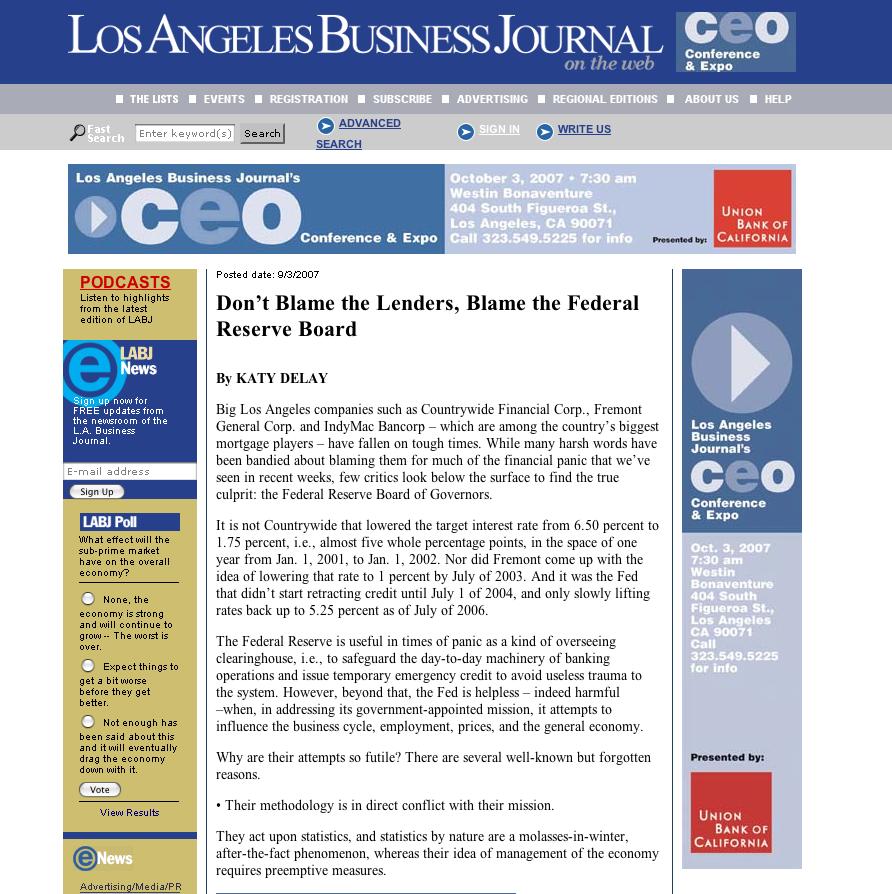
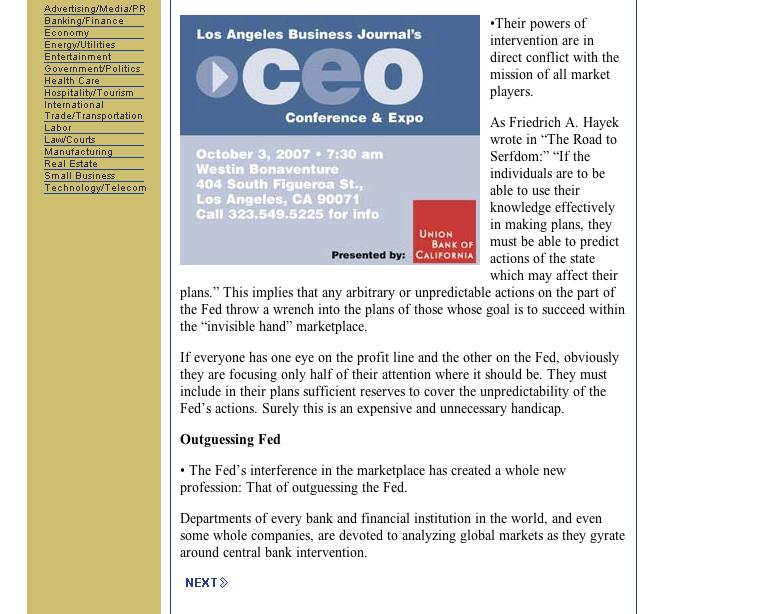
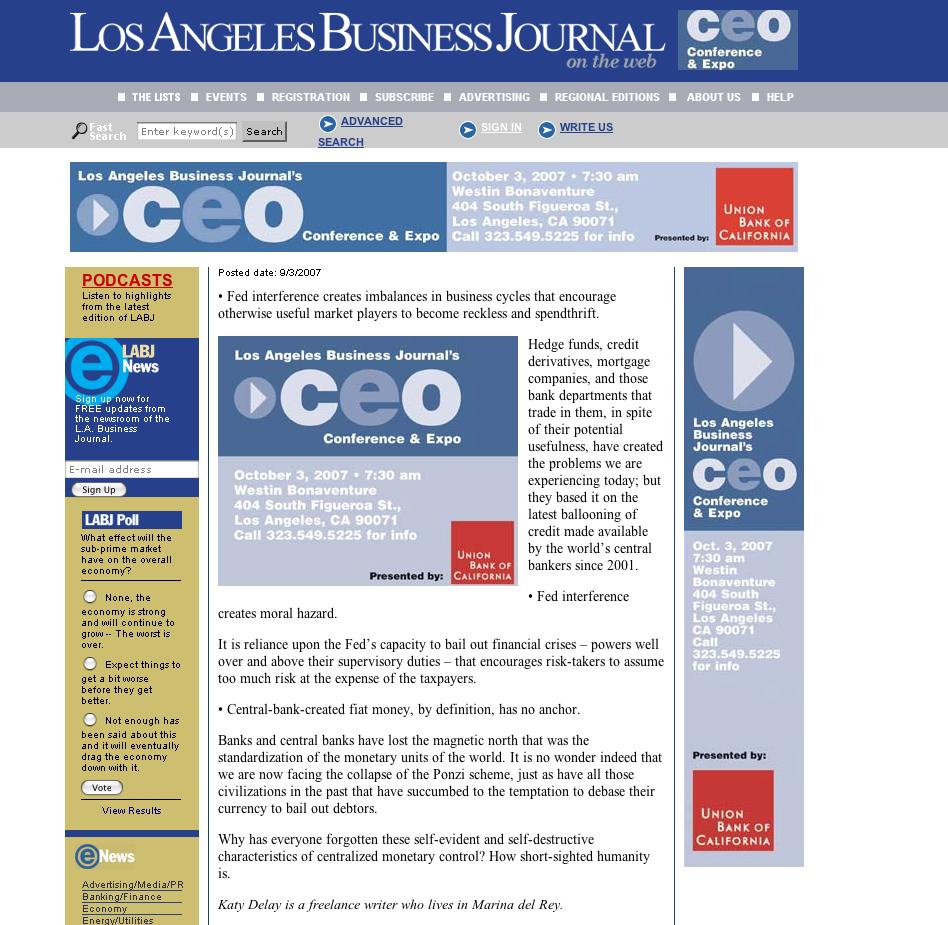
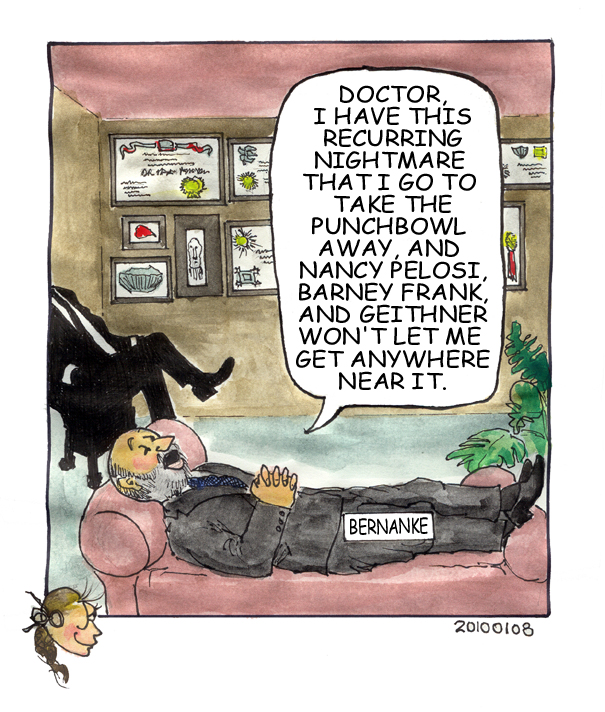
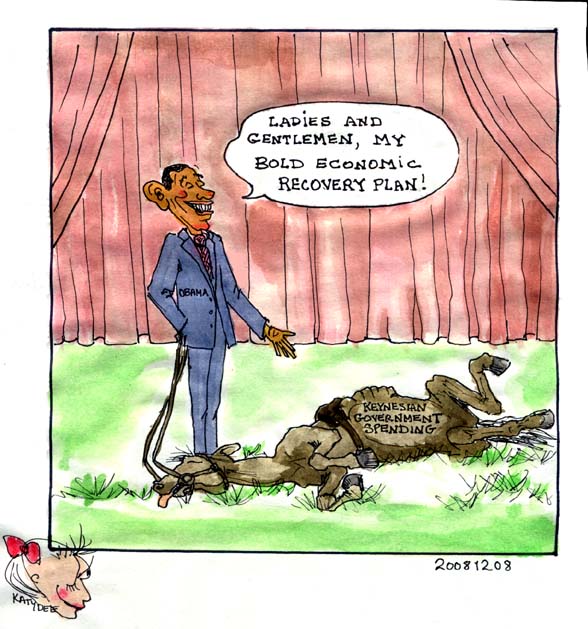
What To Do If There's a QE3? --or-- Is This 1933 All Over Again?
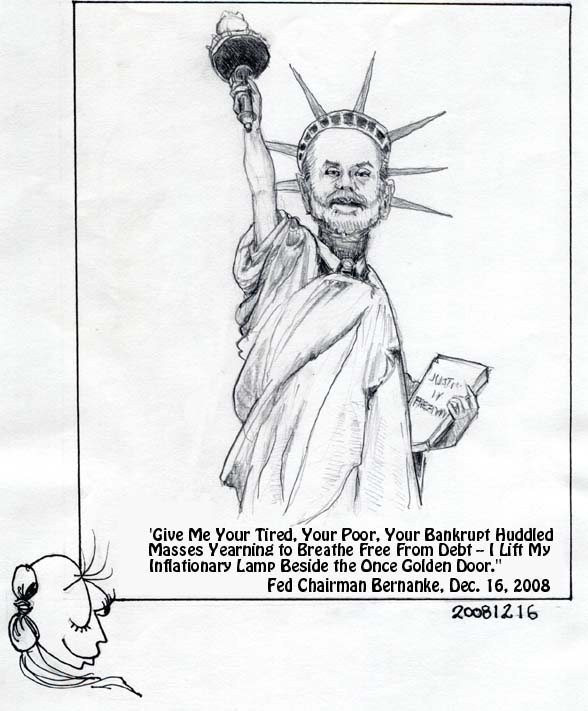
Quantitative Easing is nothing but a planned inflating.

[Beautiful rabbit bubble image created by Iman Sadeghi]
To be sure that everyone understands this phrase, let's look at the definition of "inflation":
Inflation ... 2a) an increase in the amount of money and credit in relation to the supply of goods and services b) an increase in the general price level, resulting from this, specif., an excessive or persistent increase, causing a decline in purchasing power. (Source: Webster's New World College Dictionary, 4th ed., 1999.)
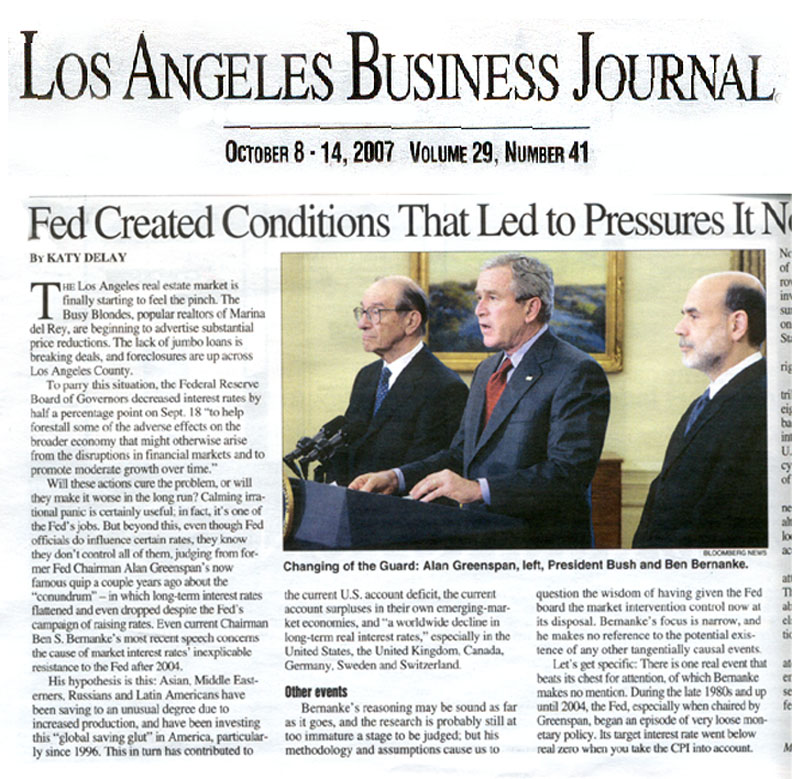
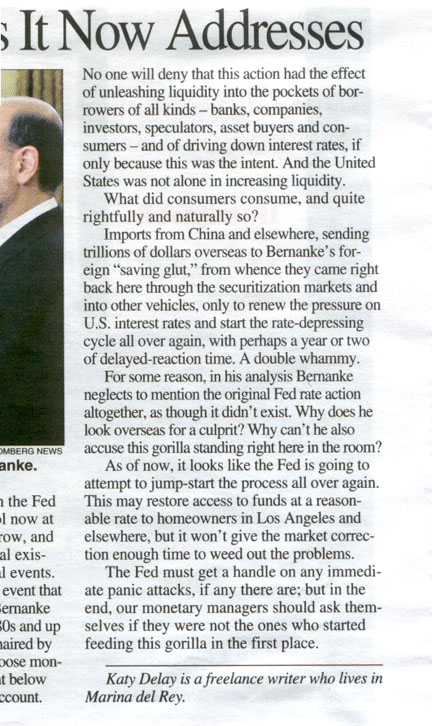
In other words, Quantitative Easing is the Federal Reserve's attempt to support the economy, general prices, and asset prices (e.g., the stock market) by purchasing government bonds with nothing but its own full-faith-and-credit, backed, of course, by the full faith and credit of the U.S. taxpayers. In effect, the Fed is performing 2a) to achieve 2b). (The decline in purchasing power is just an incidental but not unattractive side-product, at least to the Fed governors' way of thinking.)
Does the Fed really know what it is doing? Let's look at history.
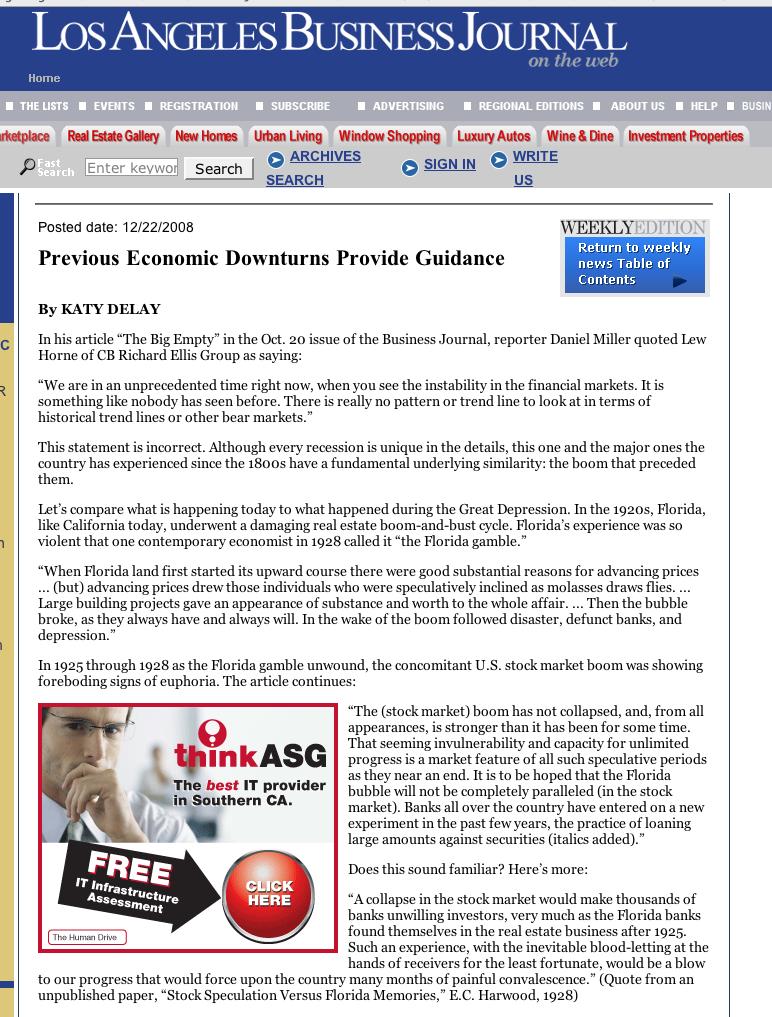
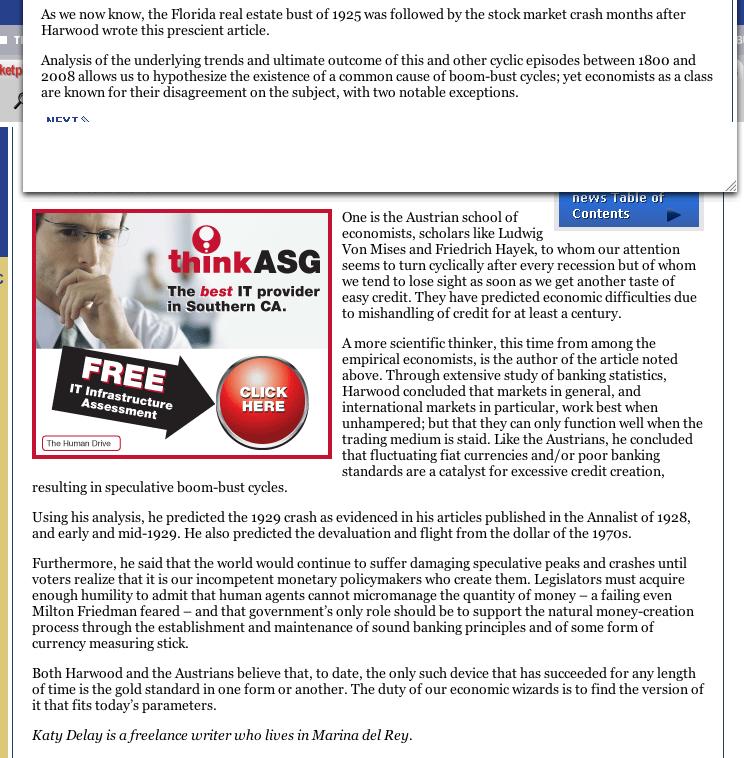
Back in 1933, a little known economist named Edward C. Harwood took a look at the Federal Reserve's intended "planned inflating" of the day. (Harwood later came to dislike using the word "inflation" when referring to 2a) above, and so he substituted the word "inflating," to avoid any confusion.)
Harwood was shocked to learn that anyone was actually considering a planned inflating as a stimulus to cure the Great Depression. He had observed through his statistical work that by 1933 the economy had rid itself of the causative factors behind the crisis, and that business was poised to make a comeback. Interference by government was the last thing the economy needed. Yet here came the politicians and Federal Reserve officials contemplating intervention.
In an article appearing in The Bankers Magazine of New York, Harwood wrote the following (I have substituted "inflating" for "inflation" where necessary):
"[T]here are several possibilities with respect to the scheme itself. It may work as planned and actually cause a return to the general price level of 1926, or at least a movement in that direction of substantial proportions. It may not work at all. It may prove to be unmanageable and carry on to an indefinite expansion of credit and currency which will finally render the dollar valueless. Unfortunately, the historical record suggests that the last named possibility is perhaps the most probable of the three. In any event, it is obvious that every businessman and every investor will be faced with the problem of adjusting his affairs to the new possibilities....
"It is clear that anyone who believes that the attempted inflating will be abortive and without substantial effect will not change his present course of action. However, those who anticipate a recovery and higher prices in general, as well as those who fear an indefinite expansion and ultimate collapse, will surely act with a view to taking advantage of the situation, at least to the extent of protecting themselves. Careful consideration of just what this will mean in the case of each type of individual mentioned will prove illuminating....
"The owner of equities has nothing to fear from inflating, in fact, is apt to gain thereby, [if he or she thinks the planned inflating will be successful;] but the position of the bond owner is vastly different.... [T]he obvious remedy for the situation is to sell fixed income securities and buy equities.
"If, however, the holder of bonds and mortgages fears a runaway inflation [hyperinflation], he may attempt to convert his securities into gold for the purpose of hoarding it....
"The situation of the depositor who has savings accumulated and of the man who owns life insurance policies is similar to that of the bond owner. In the first place, the value of dollars on deposit will decline, in terms of goods, during a period of inflating. It is quite obvious that it would pay depositors to withdraw their funds and buy equities or commodities of some kind. Those who feared that the dollar would go the course of the German paper mark would naturally withdraw their savings, and also their cash surrender values in the case of life insurance, in order to hoard gold.
"It follows that if the inflating is assumed to be effective, the banks will be called upon to pay out vast sums to depositors at the same time that the bond market is flooded with securities for sale. Banks and insurance companies will also be sellers in order to meet demands for cash or cash surrenders and complete demoralization of the bond market would result. It is hardly necessary to add that this would mean the closing of every bank in the country.... [This happened a few weeks later.]
"The truth of the matter is that inflating is the road to ruin. Deliberately planned inflating only makes the road so much the shorter because it points the way for even the most ignorant to see. Inflating can only 'succeed' by fooling most of the people all of the time. That anyone would be fooled concerning a measure which would be fought over in both branches of Congress and in the public press, is beyond belief....
"Those who advocate even the least degree of planned inflating are attempting to set in motion forces which will bring utter ruin, not only to their puny schemes, but to our whole economic fabric. Words are too weak to express adequate condemnation of those who, like children with a complicated toy, are willing to destroy that which they do not understand."
Today's Kitco gold chart gives us an interesting counterpart to his views:

[Kitco gold chart, 8/22/11, 4:30 p.m. EDT]
Today, I would say that the American economy is not in the same place Harwood found it to be in early 1933. We are faced today with another year and a half of "regime uncertainty", a major factor in our current stagnation. However, the market show must go on.
As a result of all the confusion, the market has multiple personalities these days (just like my Sybil). A third of it believes QE3 will be "successful," i.e. it will turn the stock market into a winner. A third believes the European problems will destroy the stock market but reinforce the U.S. Treasury market and dollar hegemony, in spite of QE3. Another third thinks we will see a flight from the dollar and maybe even a worldwide plunge into a Double Dip, just like in 1933.
What do you think?
[Beautiful rabbit bubble image created by Iman Sadeghi]
To be sure that everyone understands this phrase, let's look at the definition of "inflation":
Inflation ... 2a) an increase in the amount of money and credit in relation to the supply of goods and services b) an increase in the general price level, resulting from this, specif., an excessive or persistent increase, causing a decline in purchasing power. (Source: Webster's New World College Dictionary, 4th ed., 1999.)
In other words, Quantitative Easing is the Federal Reserve's attempt to support the economy, general prices, and asset prices (e.g., the stock market) by purchasing government bonds with nothing but its own full-faith-and-credit, backed, of course, by the full faith and credit of the U.S. taxpayers. In effect, the Fed is performing 2a) to achieve 2b). (The decline in purchasing power is just an incidental but not unattractive side-product, at least to the Fed governors' way of thinking.)
Does the Fed really know what it is doing? Let's look at history.
Back in 1933, a little known economist named Edward C. Harwood took a look at the Federal Reserve's intended "planned inflating" of the day. (Harwood later came to dislike using the word "inflation" when referring to 2a) above, and so he substituted the word "inflating," to avoid any confusion.)
Harwood was shocked to learn that anyone was actually considering a planned inflating as a stimulus to cure the Great Depression. He had observed through his statistical work that by 1933 the economy had rid itself of the causative factors behind the crisis, and that business was poised to make a comeback. Interference by government was the last thing the economy needed. Yet here came the politicians and Federal Reserve officials contemplating intervention.
In an article appearing in The Bankers Magazine of New York, Harwood wrote the following (I have substituted "inflating" for "inflation" where necessary):
"[T]here are several possibilities with respect to the scheme itself. It may work as planned and actually cause a return to the general price level of 1926, or at least a movement in that direction of substantial proportions. It may not work at all. It may prove to be unmanageable and carry on to an indefinite expansion of credit and currency which will finally render the dollar valueless. Unfortunately, the historical record suggests that the last named possibility is perhaps the most probable of the three. In any event, it is obvious that every businessman and every investor will be faced with the problem of adjusting his affairs to the new possibilities....
"It is clear that anyone who believes that the attempted inflating will be abortive and without substantial effect will not change his present course of action. However, those who anticipate a recovery and higher prices in general, as well as those who fear an indefinite expansion and ultimate collapse, will surely act with a view to taking advantage of the situation, at least to the extent of protecting themselves. Careful consideration of just what this will mean in the case of each type of individual mentioned will prove illuminating....
"The owner of equities has nothing to fear from inflating, in fact, is apt to gain thereby, [if he or she thinks the planned inflating will be successful;] but the position of the bond owner is vastly different.... [T]he obvious remedy for the situation is to sell fixed income securities and buy equities.
"If, however, the holder of bonds and mortgages fears a runaway inflation [hyperinflation], he may attempt to convert his securities into gold for the purpose of hoarding it....
"The situation of the depositor who has savings accumulated and of the man who owns life insurance policies is similar to that of the bond owner. In the first place, the value of dollars on deposit will decline, in terms of goods, during a period of inflating. It is quite obvious that it would pay depositors to withdraw their funds and buy equities or commodities of some kind. Those who feared that the dollar would go the course of the German paper mark would naturally withdraw their savings, and also their cash surrender values in the case of life insurance, in order to hoard gold.
"It follows that if the inflating is assumed to be effective, the banks will be called upon to pay out vast sums to depositors at the same time that the bond market is flooded with securities for sale. Banks and insurance companies will also be sellers in order to meet demands for cash or cash surrenders and complete demoralization of the bond market would result. It is hardly necessary to add that this would mean the closing of every bank in the country.... [This happened a few weeks later.]
"The truth of the matter is that inflating is the road to ruin. Deliberately planned inflating only makes the road so much the shorter because it points the way for even the most ignorant to see. Inflating can only 'succeed' by fooling most of the people all of the time. That anyone would be fooled concerning a measure which would be fought over in both branches of Congress and in the public press, is beyond belief....
"Those who advocate even the least degree of planned inflating are attempting to set in motion forces which will bring utter ruin, not only to their puny schemes, but to our whole economic fabric. Words are too weak to express adequate condemnation of those who, like children with a complicated toy, are willing to destroy that which they do not understand."
Today's Kitco gold chart gives us an interesting counterpart to his views:
[Kitco gold chart, 8/22/11, 4:30 p.m. EDT]
Today, I would say that the American economy is not in the same place Harwood found it to be in early 1933. We are faced today with another year and a half of "regime uncertainty", a major factor in our current stagnation. However, the market show must go on.
As a result of all the confusion, the market has multiple personalities these days (just like my Sybil). A third of it believes QE3 will be "successful," i.e. it will turn the stock market into a winner. A third believes the European problems will destroy the stock market but reinforce the U.S. Treasury market and dollar hegemony, in spite of QE3. Another third thinks we will see a flight from the dollar and maybe even a worldwide plunge into a Double Dip, just like in 1933.
What do you think?
Labels: fiscal stimulus, planned inflation, QE3, quantitative easing
posted by Katy Delay at 2:17 PM
0 comments